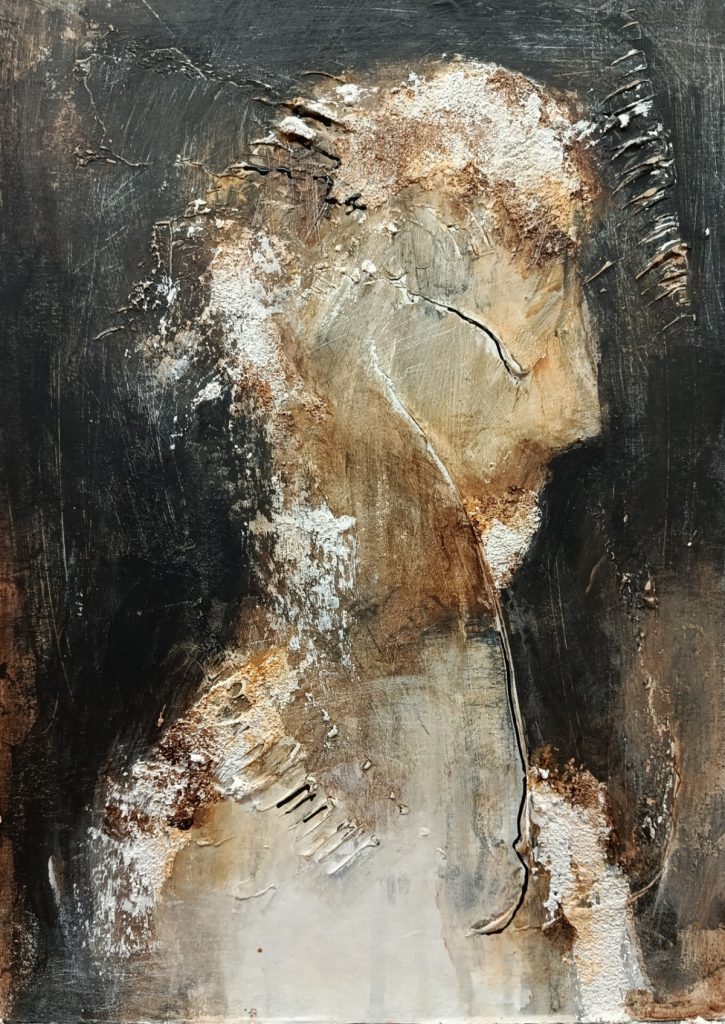
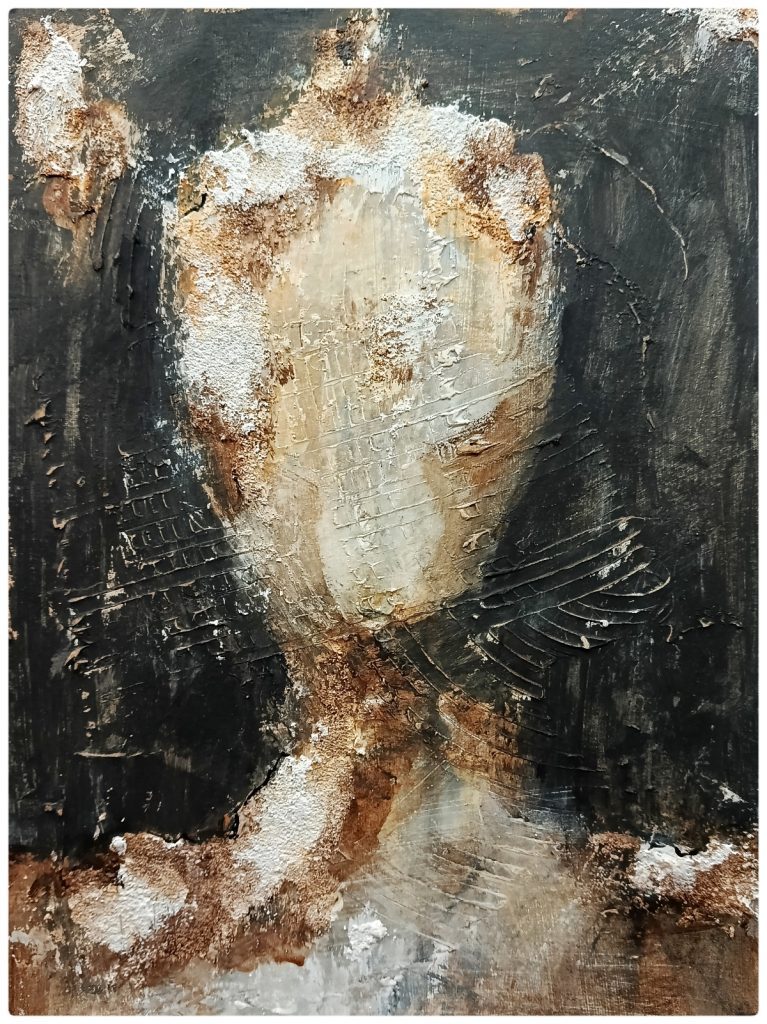
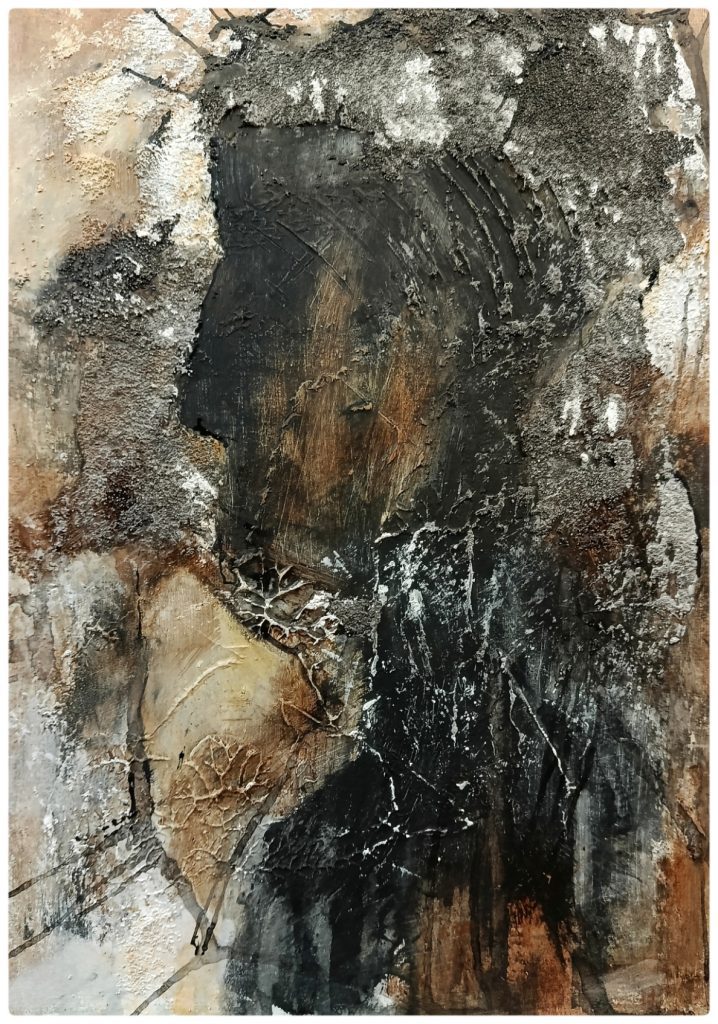
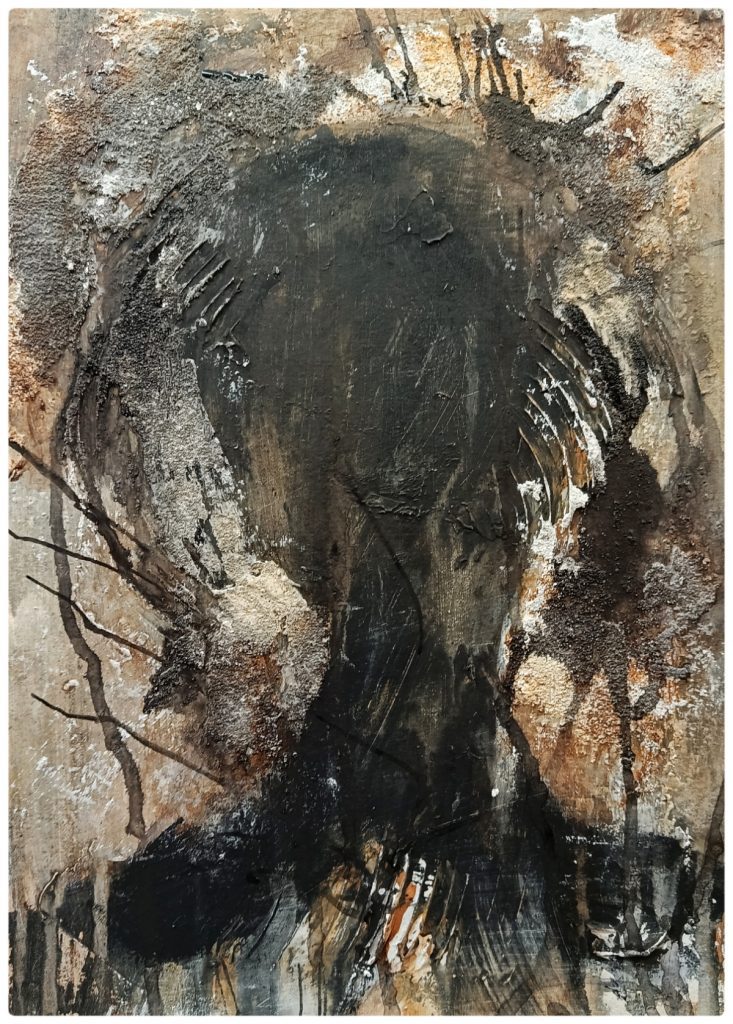
I sit, listening to Roma music, preparing to continue working on a painting inspired by Osijek.
My eyes wander across the studio — some works still in drawing, others already complete. They pause on this one. Framed, small in format, mixed media with fragments of collage. I dig through the past and through emotions, and thoughts rise from the boxes of memory. So I’d like to briefly explain what a painting truly is, and what an art lover sees in it — far beyond the decorative surface that blends with walls and furniture.
An artist never creates just a picture; he creates a reflection of his inner universe. Every work is a trace of existence, a moment when the invisible becomes visible. Emotion is not an addition to art — it is its original material, the quiet architect shaping lines, colors, and textures.
In the moment of creation, the artist becomes a bridge between what he feels and what the world can see. A painting is only a surface, but behind it stands an entire cosmos of experiences, wounds, memories, and longings. The artist does not always choose what will emerge; sometimes the work knows more about him than he knows about himself.
That is why every painting is a kind of dialogue — not only with the viewer, but also with one’s own past. Within it meet what once was, what is, and what is still being sought. Through creation, the artist does not merely express emotion; he tries to understand it, tame it, and sometimes let it go.
And so, while the paint dries, the emotion remains alive. The work becomes a witness to an inner moment, and the artist moves on, carrying within him more untold stories waiting for their form.
From those meditative moments came my series of earth‑toned abstractions. It felt natural — even inevitable — to name that entire body of work My Stories, while everything else can serve as subtitles appropriate to the moment of their creation.